How to save money on groceries with a list
Groceries are one of the few bills you can change this week. You don't need coupons or five different stores. Most of the saving comes from deciding what to buy before you're standing in front of it. These ten habits work with a pen and paper; the last section shows where an app can take some of the effort out.
By Raza Abbas, ListAIse developer. Updated .
Shop your kitchen before you write the list
Open the fridge, the freezer and the cupboards and write down what needs using up: the half bag of spinach, the chicken thighs in the freezer, the can of chickpeas at the back. Those become the first meals of the week, because you've already paid for them and the alternative is throwing them out.
Plan meals first, then write the list from the plan
If you write the list from memory in the parking lot, you end up buying what you usually buy. Pick four or five dinners, check what each one needs, and only then write the list. Look for overlap: if one recipe uses half a bunch of cilantro, plan a second one that uses the rest.
Leave one night for leftovers and one for something from the freezer. A plan with no slack falls apart by Thursday, and that is when takeout happens.
Set a number before you go
Decide what this shop should cost before you walk in, based on what your last few shops actually cost. With a number in mind, each extra item becomes something you decide to buy. Keep a running total as you go, on paper, in a calculator or in an app, so you find out you're over while you can still put something back.
Learn the prices of the twenty things you always buy
Most households buy the same short list of staples every week: milk, bread, eggs, coffee, rice, a few vegetables. Write down what you pay for them. After a month you will know a real deal when you see one, and you will notice when a "special offer" is the normal price with a yellow label on it.
Compare unit prices, not shelf prices
The shelf tag usually shows a price per kilo, per litre or per 100 g in small print. That number is the one to compare. A bigger pack is often cheaper per kilo, but not always, and a multi-buy offer can cost more per unit than the single item next to it. Only buy the big pack if you will use it before it goes off.
Write the list in store order, and stick to it
Group the list by section: produce, bakery, dairy, meat, frozen, household. You walk each aisle once, you spend less time in the store, and you are less likely to wander down the snack aisle looking for the one thing you forgot. Items that aren't on the list stay on the shelf unless they replace something that is.
Keep one list for the whole household
Two people shopping from two lists buy two jars of peanut butter. One shared list, where an item disappears when somebody buys it, stops the doubles and the "I thought you were getting it" trips back to the store.
Swap one branded item for a store brand each week
Don't switch everything at once. Try the store-brand version of one thing you buy every week: canned tomatoes, oats, dish soap. If you can't tell the difference, keep it. If you can, go back. One swap a week adds up over a couple of months, and nobody at home has to change everything at once.
Check the receipt before you leave
Scanners get prices wrong, offers fail to apply, and things get rung up twice. Look over the receipt before you leave the store, while fixing it is still a short conversation. Then keep it: it is the most accurate record you have of what your staples really cost.
Shop less often, and not hungry
Every trip is another chance to pick up things you didn't plan to buy. A proper weekly shop plus one short top-up for milk and fresh produce beats a daily stop on the way home. And eat something first: shopping hungry makes everything in the bakery look like a good idea.
Where ListAIse helps
ListAIse is the grocery list app I build. Every habit above works without it. Here is where it saves effort, if you want a list that does some of the work.
- Meal plan first (tips 1 and 2). The meal planner turns a week of recipes into one list, scales quantities to your servings and holds back ingredients you probably have at home.
- A running total (tip 3). Type "milk 3.49" and the price lands on the item. Give the list a budget and a bar shows what's spent and what's left. That's the grocery budget app side of ListAIse, and it's free.
- Your prices, remembered (tips 4, 5 and 9). Every price change goes into the item's history, with a per kg or per litre price for weighed items. Scan a receipt to track prices from receipts without typing them.
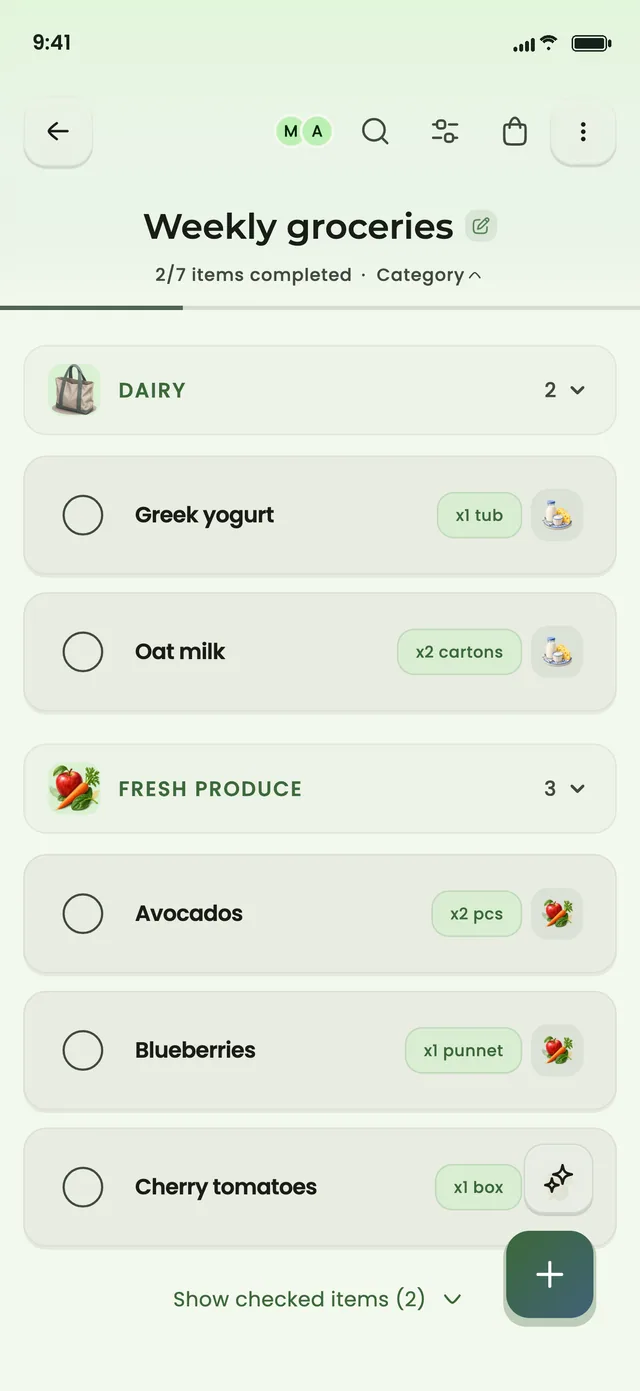
- Store order and one list (tips 6 and 7). Items are sorted into store sections as you add them, and a shared list updates on every phone when someone ticks something off.
Still choosing an app? See how the best grocery list apps compare, free and paid.